<?xml version="1.0" encoding="UTF-8"?>
<rss version="2.0"
	xmlns:content="http://purl.org/rss/1.0/modules/content/"
	xmlns:wfw="http://wellformedweb.org/CommentAPI/"
	xmlns:dc="http://purl.org/dc/elements/1.1/"
	xmlns:atom="http://www.w3.org/2005/Atom"
	xmlns:sy="http://purl.org/rss/1.0/modules/syndication/"
	xmlns:slash="http://purl.org/rss/1.0/modules/slash/"
	>

<channel>
	<title>OlsonND.com &#187; Heart Disease</title>
	<atom:link href="http://olsonnd.com/tag/heart-disease/feed/" rel="self" type="application/rss+xml" />
	<link>http://olsonnd.com</link>
	<description>Healthy News From a New Attitude</description>
	<lastBuildDate>Sat, 04 Sep 2010 09:11:18 +0000</lastBuildDate>
	<language>en</language>
	<sy:updatePeriod>hourly</sy:updatePeriod>
	<sy:updateFrequency>1</sy:updateFrequency>
	<generator>http://wordpress.org/?v=3.0.1</generator>
		<item>
		<title>The Problems that Come with a Long Life</title>
		<link>http://olsonnd.com/the-problems-that-come-with-a-long-life/</link>
		<comments>http://olsonnd.com/the-problems-that-come-with-a-long-life/#comments</comments>
		<pubDate>Sat, 24 Jan 2009 15:36:12 +0000</pubDate>
		<dc:creator>Dr. Scott</dc:creator>
				<category><![CDATA[Longevity]]></category>
		<category><![CDATA[Cancer]]></category>
		<category><![CDATA[Diabetes]]></category>
		<category><![CDATA[Heart Disease]]></category>
		<category><![CDATA[longevity]]></category>
		<category><![CDATA[slow disease]]></category>

		<guid isPermaLink="false">http://olsonnd.com/?p=1175</guid>
		<description><![CDATA[I'm sorry to say this to you if you don't know it, but medicine is never going to find a cure for cancer, or multiple sclerosis, or diabetes, or heart disease or hundred of other slow-developing diseases.]]></description>
			<content:encoded><![CDATA[<p>The history of health is an interesting study&#8230; well, at least for people like me who are interested in both health and history.</p>
<p>The reason why the history of health is interesting is that what people worry about has changed over time. Ask someone 200 years ago what health concerns they have and you would hear them say that they fear some sort of accident or infection. The reason why they feared accidents and infections is because most people died from infections or injuries 200 years ago.</p>
<p>What is remarkable when you ask that same question of people today is that, while infection is a worry for us to, it is a small concern compared to our fear of cancer or heart disease or a dementia like Alzheimer&#8217;s. This dramatic shift in our health concerns has happened in the last 100 years and I&#8217;m not sure most people are aware of it or what it means about where you turn for health care or how it should change the choices you make every day.</p>
<h2>The Nobel Battle</h2>
<p>For most of human history, the battle for health has been a battle over infection and sudden illness. This is a battle that modern medicine has waged well and has, for the most part, won. The introduction of wonder drugs like antibiotics, steroids, anti-inflammatories and more were a boon to our health and longevity. While there is a great debate about just how much these drugs have done for our health and longevity, it is pretty clear that the wonder drugs did play a role in the improvement of our health. Yes, improved sanitation and food handling have reduced infectious disease, but the drugs, too, have played an important role.</p>
<p>Combine the change in sanitation, the introduction of emergency medicine to deal with accidents, and powerful drugs and you change the average life expectancy from around 40 or 50 years old 100 years ago to around 78 today. Quite an accomplishment.</p>
<p>Out goes the era of infections and sudden diseases and in comes the modern age with new health challenges.</p>
<h2>Enter the Era of Slow Diseases</h2>
<p>Slow diseases are completely different from sudden diseases like infection and accidents. No longer are we terrified about getting the plague or other infectious disease, we are now mostly concerned about cancer, diabetes, heart disease. These new fears reflect the reality. Yes, there is AIDS, bird flu and other infectious diseases, but your risk of dying from one of those infectious diseases is small compared to the risk that you are going to die from a disease that slowly creeps up on you.</p>
<p>You currently have a 1 in 5 risk of dying from heart disease and about a one in seven chance of dying form cancer.</p>
<p>But these slow diseases are fundamentally different from the diseases of previous generations and require you to think and act differently.</p>
<p>To understand why you have to think differently, you have to remember the frog in the pot of boiling water. Many people have heard about the story of the frog in the hot water: If you put a frog in some very hot water, it will jump right out, but if you put him in cold water and slowly bring it to a boil he will die. The diseases we face are exactly like the slowly boiling water: they are slow that it is not apparent that we are in danger until it is too late.</p>
<h2>Confusing the Role of Medicine</h2>
<p>I  think the biggest problem people have when they have a slow disease is confusing the role of medicine and drug therapy. If you have an sudden injury, acute infection, then standard medicine is the way go. But when you have a slow disease, your approach has to be different. Yes, you can go to traditional medicine if you have something like arthritis, and they can help your pain go away, but the medicines they are giving you do nothing to address the underlying cause of the disease. You may feel better, but that feeling is not going to last, as the drugs either have side-effects that are worse than the disease, or they stop being effective.</p>
<p>Slow diseases require a different approach and a different attitude on your part. I&#8217;m sorry to say this to you if you don&#8217;t know it, but medicine is never going to find a cure for cancer, or multiple sclerosis, or diabetes, or heart disease or hundred of other slow-developing diseases. I know you want to believe that medicine will cure everything (and I would like to too) but these diseases do not lend themselves to being cured by a pill. The body is just too complex and the drug solution not helpful enough.</p>
<p>I&#8217;m not alone is saying this, even the American Diabetes Association, American Heart Association, American Cancer Society would agree: you can prevent up to 70 percent of these diseases by changing your diet and your habits.</p>
<h2>Change Your Approach</h2>
<p>Since the chances you are going to be faced with a slow disease are much higher than an acute or sudden disease, you have to change your approach to health care. Your health is in your hands. The small little things you do every day are important. Taking the stairs instead of an elevator, choosing to avoid soda and sugars, getting enough sleep, maintaining a regular health regime&#8230; all these are important.</p>
<p>You cannot wait for medicine to cure the diseases you will have in the future; that help will never come. You have to pay attention to the temperature of the water around you and jump out of the pot before it starts boiling instead of waiting until tomorrow to start changing. There is no more powerful thing that you can do then to change your habits and improve your health.</p>
<a name="fb_share" type="button_count" share_url="http://olsonnd.com/the-problems-that-come-with-a-long-life/">Share on Facebook</a>]]></content:encoded>
			<wfw:commentRss>http://olsonnd.com/the-problems-that-come-with-a-long-life/feed/</wfw:commentRss>
		<slash:comments>2</slash:comments>
		</item>
		<item>
		<title>Health News Digest 12/17/2008</title>
		<link>http://olsonnd.com/health-news-digest-12172008/</link>
		<comments>http://olsonnd.com/health-news-digest-12172008/#comments</comments>
		<pubDate>Wed, 17 Dec 2008 17:29:59 +0000</pubDate>
		<dc:creator>Dr. Scott</dc:creator>
				<category><![CDATA[Cancer]]></category>
		<category><![CDATA[Diabetes]]></category>
		<category><![CDATA[Glycemic Index]]></category>
		<category><![CDATA[Heart Disease]]></category>
		<category><![CDATA[Menopause]]></category>
		<category><![CDATA[News Digest]]></category>
		<category><![CDATA[Stress]]></category>
		<category><![CDATA[breast cancer]]></category>
		<category><![CDATA[glycemic]]></category>
		<category><![CDATA[heart]]></category>
		<category><![CDATA[Hormone replacement]]></category>
		<category><![CDATA[HRT]]></category>
		<category><![CDATA[low glycemic]]></category>
		<category><![CDATA[ovarian cancer]]></category>
		<category><![CDATA[stress]]></category>

		<guid isPermaLink="false">http://olsonnd.com/?p=1021</guid>
		<description><![CDATA[Today marks the beginning of a new feature here at OlsonND.com, the weekly Health News Digest. I will compile and review the latest research on a variety of health news items. Health News: HORMONE REPLACEMENT THERAPY (HRT): HRT and the risks of breast cancer were reviewed in a recent symposium. It appears that even using HRT for a short time increased the risk of breast cancer. Which begs the question: why use HRT? The risks are not a small increase, but for some women constitute a doubling of their risk for breast cancer. Dr. Scott&#8217;s Comments: Hormones are powerful and can create huge problems in our bodies. Estrogen, in particular, is a problem for women because of the risk of breast, endometrial, and ovarian cancers. Part of the problem lies in the fact that most HRT are synthetic hormones that are not natural to humans. Other problems have to do with the fact that many chemicals in our environment act like estrogens (including plastics, pesticides, and a host of other chemicals). The final question has to be should we be putting hormones in an aging person at all? HRT is a travesty because there are many natural substitutes that work [...]]]></description>
			<content:encoded><![CDATA[<p>Today marks the beginning of a new feature here at OlsonND.com, the weekly<strong> Health News Digest</strong>. I will compile and review the latest research on a variety of health news items.</p>
<h1>Health News:</h1>
<p><strong><span style="text-decoration: underline;">HORMONE REPLACEMENT THERAPY</span></strong><strong><span style="text-decoration: underline;"> (HRT)</span>:</strong> HRT and the risks of breast cancer were reviewed in a recent symposium. It appears that even using HRT for a short time increased the risk of breast cancer. Which begs the question: why use HRT? The risks are not a small increase, but for some women constitute a doubling of their risk for breast cancer.</p>
<blockquote><p><strong>Dr. Scott&#8217;s Comments</strong>: Hormones are powerful and can create huge problems in our bodies. Estrogen, in particular, is a problem for women because of the risk of breast, endometrial, and ovarian cancers. Part of the problem lies in the fact that most HRT are synthetic hormones that are not natural to humans. Other problems have to do with the fact that many chemicals in our environment act like estrogens (including plastics, pesticides, and a host of other chemicals). The final question has to be should we be putting hormones in an aging person at all?</p>
<p>HRT is a travesty because there are many natural substitutes that work just as well, without the side effects.</p></blockquote>
<p><a href="http://health.dailynewscentral.com/content/view/0002670/31/">original article</a></p>
<p><strong><span style="text-decoration: underline;">CANCER MUCH WORSE FOR DIABETICS</span></strong>: Cancer is currently the number two killer worldwide and is rapidly approaching <a href="http://news.yahoo.com/s/ap/20081210/ap_on_he_me/med_global_cancer">number one</a>. People with diabetes are more than 40 percent likely to die in the years right after a cancer diagnosis than people who are not diabetic.</p>
<blockquote><p><strong>Dr Scott&#8217;s Comments</strong>: There are no well-established links between sugar consumption and cancer &#8212; at least not yet. This new study sheds light on another horrible aspect of diabetes: it makes surviving a cancer diagnosis harder. For me, this adds to the destruction wrought by sugar. Not only is sugar toxic to our blood vessels (witness the kidney, eye and heart damage in diabetics), but it also leads to obesity, heart disease and diabetes. Clearly we have to start avoiding the sugar and <a href="http://olsonnd.com/what-foods-that-act-like-sugar/">foods that act like sugar</a> in our diets.</p></blockquote>
<p><a href="http://news.yahoo.com/s/nm/20081216/hl_nm/us_cancer_diabetes">original article</a></p>
<p><strong><span style="text-decoration: underline;">LOW GLYCEMIC DIET FOR DIABETICS</span></strong>: The prestigious <em>Journal of the American Medical Association</em> has published an article showing that diabetics eating foods that are low on the glycemic index had better sugar control than those that didn&#8217;t.</p>
<blockquote><p><strong>Dr Scott&#8217;s Comments</strong>: I&#8217;m going to borrow a word from my 10 year-old-daughter to describe the finding of this study: <strong>DUH</strong>! Medical science has come a long way, but they have yet to make any connection between what we eat and the diseases that we get. Maybe this study will change their minds. Yes, diabetes has something to do with the sugar and foods that act like sugar that we eat every day. I think that people eating <a href="http://olsonnd.com/what-is-eating-below-the-glycemic-index/">Eating Below the Glycemic Index</a> would fare even better&#8230; maybe even reverse their diabetes.</p></blockquote>
<p><a href="http://diabetes.webmd.com/news/20081216/low-glycemic-index-diet-for-diabetes?src=RSS_PUBLIC">original article</a></p>
<p><strong><span style="text-decoration: underline;">STRESS INCREASES HEART DAMAGE</span></strong>: People who reported a high amount of stress in their lives increased the risk of a cardiovascular event by as much as 50 percent when compared to people who have a low amount of stress. The increase in disease was evident by the number of heart attacks, bypass surgeries, and strokes that high-stress people suffered from.</p>
<blockquote><p><strong>Dr. Scott&#8217;s Comments</strong>: This study shows the strong connection between our minds and our bodies. Stress is a big killer, but is often hard to define or understand. I personally feel the best treatment for stress is <a href="http://olsonnd.com/best-drug-ever-exercise/">exercise</a>. Whenever the world starts weighing too much on my shoulders, I know I have to get out for a run, or hop on my bike, or even just take a walk outside. It also helps to listen to other people&#8217;s worries: When you hear someone describe what they are worried about, you realize that many of their fears are ungrounded, maybe yours are too?</p></blockquote>
<p><a href="http://www.nlm.nih.gov/medlineplus/news/fullstory_72819.html">original article</a></p>
<a name="fb_share" type="button_count" share_url="http://olsonnd.com/health-news-digest-12172008/">Share on Facebook</a>]]></content:encoded>
			<wfw:commentRss>http://olsonnd.com/health-news-digest-12172008/feed/</wfw:commentRss>
		<slash:comments>2</slash:comments>
		</item>
		<item>
		<title>Best Drug Ever: Exercise</title>
		<link>http://olsonnd.com/best-drug-ever-exercise/</link>
		<comments>http://olsonnd.com/best-drug-ever-exercise/#comments</comments>
		<pubDate>Fri, 07 Nov 2008 16:17:58 +0000</pubDate>
		<dc:creator>Dr. Scott</dc:creator>
				<category><![CDATA[Exercise]]></category>
		<category><![CDATA[Aging]]></category>
		<category><![CDATA[Cancer]]></category>
		<category><![CDATA[Diabetes]]></category>
		<category><![CDATA[exercise]]></category>
		<category><![CDATA[Heart Disease]]></category>
		<category><![CDATA[Weight Loss]]></category>

		<guid isPermaLink="false">http://olsonnd.com/best-drug-ever-exercise/</guid>
		<description><![CDATA[Exercise is a powerful way to change how you feel and it can actually alter or reverse many diseases. If exercise were a drug, doctors couldn't keep it on the shelf. Exercise is truly the best drug ever, and the incredible part about the exercise story is that this "drug" is free and it has virtually no side effects. ]]></description>
			<content:encoded><![CDATA[<h2>Fountain of Youth</h2>
<p>I have long said that exercise is a panacea and a cure-all, and recent research has backed up my claim. I find it funny to think that Ponce De Lion, the legendary explorer who went off in search of the fountain of youth, actually found the elixir to long life, only it wasn&#8217;t a fountain at all, but the <em>exercise he was getting</em><em> looking</em> for the fountain. Ponce De Lion would have lived a long life if an arrow hadn&#8217;t cut it short.</p>
<p>Exercise is a powerful way to change how you feel and it can actually alter or reverse many diseases. If exercise were a drug, doctors couldn&#8217;t keep it on the shelf. Exercise is truly the best drug ever, and the incredible part about the exercise story is that this &#8220;drug&#8221; is free and it has virtually no side effects.</p>
<p>The importance of exercising is summed up well in this quote:</p>
<p style="padding-left: 30px;"><em><strong>The Global Burden of Disease Study initiated by the World Health Organization included physical inactivity among the most important risk factors threatening global health. A sedentary life style may be as detrimental to health as smoking.(1)</strong><br />
</em></p>
<p>Read that again! That quote is saying that <strong>not exercising</strong> has the same bad health effects as <strong>smoking</strong>. Clearly you have to get up off your butt and start moving it around some.</p>
<p>Let&#8217;s take a look and see just how powerful of a drug exercise can be.</p>
<h2>Health Benefits of Exercise</h2>
<p>The research supporting the benefits of exercise is enormous and the following are just a sample of what is out there.</p>
<ul>
<li><strong>Cardiovascular Disease</strong>: Exercise improves heart function, blood flow to the whole body, nervous system control over the heart, and a technical measurement called endothelial function in patients with heart disease.(2) It appears from a large number of studies that exercise can help prevent heart disease. Exercise even helps people who have had a heart attack, reducing symptoms, complications, trips back to the hospital, and longer life. Not only that, but their quality of their life is better, they have lower depression, and they return to work or active life quicker than people who don&#8217;t exercise.<sup>(3)<br />
</sup></li>
</ul>
<ul>
<li><strong>High Blood Pressure</strong>: The good news is that high blood pressure appears to respond best to moderate exercise (as opposed to strenuous exercise). With as little as 30 minutes of continuous exercise a day, patients are able to reduce their high blood pressure. It is important to note that the <em>kind</em> of exercise is important: continuous. Continuous exercise is walking, running, biking and <strong>not</strong> tennis, golf or even soccer or basketball.<sup>(4)</sup> The jury is still out if weight training or high-intensity exercise will help high blood pressure.</li>
</ul>
<ul>
<li><strong>Rheumatoid arthritis</strong>: Moderate exercise has been shown to improve the symptoms (less pain) and the functional ability (they can do more) in people with rheumatoid arthritis.(5)</li>
</ul>
<ul>
<li><strong>Diabetes</strong>: Exercise has been studied in diabetics for a long time and has been shown to improve blood sugar control and reduce the need for medications. In a new study on the effects of exercise in diabetics, researchers were able to prove that long-term blood sugar control (by measuring hemoglobin A1c) is much better in diabetics that exercise than those that don&#8217;t, even when there they didn&#8217;t lose weight because of the exercising.(6)</li>
</ul>
<ul>
<li><strong>Weight Loss</strong>: As you can guess, exercise and weight loss has been extensively studied. A new study on overweight children showed that exercise helped them (more than adults) maintain their weight loss over a long period of time.(7) This study is so important and demonstrates that exercise can become a habit if introduced early enough in someone&#8217;s life. While normal-weight people should exercise at least 30 minutes (moderate intensity) on most days; overweight people should exercise 60 to 80 minutes a day.(8)</li>
</ul>
<ul>
<li><strong>Cognitive function</strong>:  There is pretty good evidence that exercise will help maintain brain function, including memory, cognitive function, and attention in older adults. Since Alzheimer&#8217;s (and dementia in general) are becoming such a health disaster, it is good to know that exercise can be preventive.(9)</li>
</ul>
<ul>
<li><strong>Depression and Anxiety</strong>: A prescription for exercise often works better in people with depression and anxiety than taking a drug. New research suggests that this effect may be due to the ability of exercise to help us deal with stress.(10) Who couldn&#8217;t use a little stress and anxiety reduction?</li>
</ul>
<h2><strong>What Else?<br />
</strong></h2>
<p>Exercise has been show to:</p>
<ul>
<li>Improve self-esteem, especially in children.(11)</li>
<li>Reduce the risk for colon cancer.(12)</li>
<li>Improves our quality of life, especially in older people.(13)</li>
<li>Reduce back pain.(14)</li>
<li>Prevent osteoporosis.(15)</li>
</ul>
<h2>Move Your Buns Around</h2>
<p>Okay, I didn&#8217;t quite tell you the truth above, there are side-effects from exercise and you can hurt yourself; luckily, though, most of the damage you can do is only temporary (unlike some drug damage).</p>
<p>Here is what you need to know to get started on your own exercise program:</p>
<ul>
<li>Always check with your health care provider before starting an exercise program.</li>
<li>You don&#8217;t have to kill yourself; moderate exercise is what has been shown to be the most effective for most conditions.</li>
<li>Start slow and build up to 30 minutes every (or most) days. You&#8217;ll want to do more if you are overweight.</li>
<li>Pick a continuous exercise: this means your heart rate is up for a sustained period. Choose exercise like running, walking, cycling, cross-country skiing and others.</li>
<li>Consider adding weight lifting into your program.</li>
</ul>
<p>Most of all, you want to have fun and stick with it. Yes, it can be a drag putting on clothes and getting out the door in the rain and snow, but most people love their exercise once they get going. If you can&#8217;t exercise outside, I recommend that you &#8220;pay&#8221; for the television that you watch by putting an exercise bike or a treadmill in front of the TV.</p>
<p>Take advantage of the best drug ever and start your exercise program today!</p>
<p><span style="text-decoration: underline;">Citations</span></p>
<p><!--[if gte mso 9]><xml> </xml><![endif]--><!--[if gte mso 9]><xml> Normal   0               false   false   false      EN-US   X-NONE   X-NONE </xml><![endif]--><!--[if gte mso 9]><xml> </xml><![endif]--><!--  --><!--[if gte mso 10]> <mce:style><!   /* Style Definitions */  table.MsoNormalTable 	{mso-style-name:"Table Normal"; 	mso-tstyle-rowband-size:0; 	mso-tstyle-colband-size:0; 	mso-style-noshow:yes; 	mso-style-priority:99; 	mso-style-qformat:yes; 	mso-style-parent:""; 	mso-padding-alt:0in 5.4pt 0in 5.4pt; 	mso-para-margin-top:0in; 	mso-para-margin-right:0in; 	mso-para-margin-bottom:10.0pt; 	mso-para-margin-left:0in; 	mso-pagination:widow-orphan; 	font-size:11.0pt; 	font-family:"Calibri","sans-serif"; 	mso-ascii-font-family:Calibri; 	mso-ascii-theme-font:minor-latin; 	mso-hansi-font-family:Calibri; 	mso-hansi-theme-font:minor-latin;} --> <!--[endif]--></p>
<p>1. Erikssen G. Physical fitness and changes in mortality: the survival of the fittest. Sports Med. 2001;31(8):571-6.</p>
<p>2. Humphrey R, Bartels MN. Exercise, cardiovascular disease, and chronic heart failure. Arch Phys Med Rehabil. 2001 Mar;82(3 Suppl 1):S76-81</p>
<p>3. Ades PA, Coello CE. Effects of exercise and cardiac rehabilitation on cardiovascular outcomes. Med Clin North Am. 2000 Jan;84(1):251-65, x-xi.</p>
<p>4. Pescatello LS. Exercise and hypertension: recent advances in exercise prescription. Curr Hypertens Rep. 2005 Aug;7(4):281-6.</p>
<p>5. Metsios GS, Stavropoulos-Kalinoglou A, et al. Rheumatoid arthritis, cardiovascular disease and physical exercise: a systematic review. Rheumatology (Oxford). 2008 Mar;47(3):239-48.</p>
<p>6. Boulé NG, Haddad E, Kenny GP, et al. Effects of exercise on glycemic control and body mass in type 2 diabetes mellitus: a meta-analysis of controlled clinical trials. JAMA. 2001 Sep 12;286(10):1218-27.</p>
<p>7. Sothern MS. Exercise as a modality in the treatment of childhood obesity. Pediatr Clin North Am. 2001 Aug;48(4):995-1015.</p>
<p>8. Leermakers EA, Dunn AL, Blair SN. Exercise management of obesity. Med Clin North Am. 2000 Mar;84(2):419-40.</p>
<p>9. Angevaren M, Aufdemkampe G, Verhaar HJ. Physical activity and enhanced fitness to improve cognitive function in older people without known cognitive impairment. Cochrane Database Syst Rev. 2008 Apr 16;(2):CD005381</p>
<p>10.  Salmon P. Effects of physical exercise on anxiety, depression, and sensitivity to stress: a unifying theory. Clin Psychol Rev. 2001 Feb;21(1):33-61.</p>
<p>11. Ekeland E, Heian F, Hagen KB. Can exercise improve self esteem in children and young people? A systematic review of randomised controlled trials. Br J Sports Med. 2005 Nov;39(11):792-8</p>
<p>12. Trojian TH, Mody K, Chain P. Exercise and colon cancer: primary and secondary prevention. Curr Sports Med Rep. 2007 Apr;6(2):120-4.</p>
<p>13. Stewart KJ. Physical activity and aging. Ann N Y Acad Sci. 2005 Dec;1055:193-206.</p>
<p>14. Hayden JA, van Tulder MW, Tomlinson G. Systematic review: strategies for using exercise therapy to improve outcomes in chronic low back pain. Ann Intern Med. 2005 May 3;142(9):776-85.</p>
<p>15. Hingorjo MR, Syed S, Qureshi MA. Role of exercise in osteoporosis prevention&#8211;current concepts. J Pak Med Assoc. 2008 Feb;58(2):78-81</p>
<a name="fb_share" type="button_count" share_url="http://olsonnd.com/best-drug-ever-exercise/">Share on Facebook</a>]]></content:encoded>
			<wfw:commentRss>http://olsonnd.com/best-drug-ever-exercise/feed/</wfw:commentRss>
		<slash:comments>6</slash:comments>
		</item>
		<item>
		<title>Weird Things Humans Do</title>
		<link>http://olsonnd.com/weird-things-humans-do/</link>
		<comments>http://olsonnd.com/weird-things-humans-do/#comments</comments>
		<pubDate>Wed, 05 Nov 2008 16:41:03 +0000</pubDate>
		<dc:creator>Dr. Scott</dc:creator>
				<category><![CDATA[Health Advice]]></category>
		<category><![CDATA[Aging]]></category>
		<category><![CDATA[Complete Guides]]></category>
		<category><![CDATA[Health]]></category>
		<category><![CDATA[Heart Disease]]></category>
		<category><![CDATA[Sugar Addiction]]></category>
		<category><![CDATA[Weight Loss]]></category>

		<guid isPermaLink="false">http://olsonnd.com/weird-things-humans-do/</guid>
		<description><![CDATA[We do a lot of strange things, and unfortunately for our health, they often lead to illness. As a whole, our memories are short, we think that the things we do every day are the things that humans have always done, but this is just not true. ]]></description>
			<content:encoded><![CDATA[<h2>Things That Seem Normal, But are Not</h2>
<p>We do a lot of strange things, and unfortunately for our health, they often lead to illness. As a whole, our memories are short, we think that the things we do every day are the things that humans have always done, but this is just not true.</p>
<p>To determine what we should do, we often look to other people for help; scientists call this &#8220;social proof&#8221;. Social proof is fine when everyone around you is acting in accordance with their health and their happiness, but as you might guess from all the unhealthy people you see every day, this just isn&#8217;t the case. We have slowly moved from healthy living habits to destructive habits and the movement has been so slow we have barely noticed it. I&#8217;ve gathered together some of the weird things humans do that can seem perfectly normal because everyone else is doing them, but are not.</p>
<p>If you are looking to improve your health, you might want to steer clear of what everyone else is doing.</p>
<ul>
<li><strong>Not Sleeping When We Are Tired:</strong> Look around you: dogs, cats – even the mice in your walls – all lie down and sleep when they are tired. We don&#8217;t do that. What do you do if you are tired? If you are like a lot of us, you reach for coffee. Animals don&#8217;t do that, they lie down and sleep when they are tired. There are actually two issues here: the first is that amount of sleep you need and the second is sleeping during the day. It can be a bit hard to determine what is normal for the amount of sleep we need, but looking at animals, they are sleeping much more than we are and they tend to break up their sleep into smaller chunks. You might need eight hours of sleep, but maybe your number is six or ten hours. You should also consider adding a nap into your routine. Next time you think you need a pick-me-up from your coffee cup, try a short nap. I&#8217;m a big fan of the nap and try to catch one every day; it is the best way I know to &#8220;reboot&#8221; my brain for an afternoon in front of the computer. Here is a great page for information on <a href="http://www.boston.com/bostonglobe/ideas/naps/">napping</a> and a <a href="http://zentofitness.com/a-no-nonsense-guide-to-napping/">no nonsense guide to napping</a>.  <strong><br />
</strong></li>
<li><strong>Not Relaxing:</strong> You relax don&#8217;t you? You go home, sit in front of the television and relax. Right? That is not what I&#8217;m talking about. You, your body, your mind, and your soul need a time out. I&#8217;m not talking about sitting in front of the television, but true relaxing, just hanging out and doing nothing. To understand what I mean by relaxing, try picturing a day at the beach. The beach seems to be one place in our society where it is okay to just sit and do nothing (if you didn&#8217;t pack in toys, radios…). Try to set aside a small portion of your day for pretending you are on the beach. Just sit and stare at the clouds or your ceiling or whatever. Do nothing, just let your mind wander. If you are into prayer or mediation, this is a great time to practice that. <strong><br />
</strong></li>
<li><strong>Eating Grains</strong>:<strong><br />
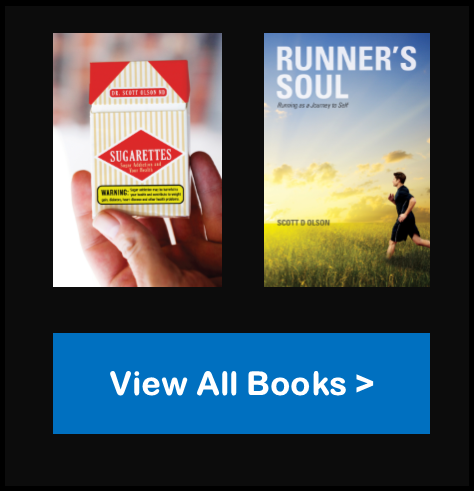
</strong>I know what you are thinking when you read this: of course it is normal to eat grains; the government recommends that grains make up most of our diet, it has to be normal. But, once again, eating grains seems normal because everyone is doing it, but grains are not optimal food for humans. Humans have only been munching on grains – in any large amounts – for the last 7,000 years. Sure, that sounds like a lot of time, but it actually is not. Our bodies have not adapted to the large amount of carbohydrates we put into them. High blood sugar which results from eating grains is responsible for more ill health than smoking cigarettes (see my book <a href="http://www.amazon.com/gp/product/1439202761?ie=UTF8&amp;tag=ols09-20&amp;linkCode=as2&amp;camp=1789&amp;creative=390957&amp;creativeASIN=1439202761">Sugarettes</a>). Try replacing grains with fruits and vegetables at every meal. You will be astonished at how much better you feel.</li>
<li><strong>Wearing Shoes</strong>: Putting shoes on your feet seems pretty normal, right? Actually, your foot is incredible complex and wearing shoes all the time can be harmful to your feet. I suggest you spend at least part of the day waking around without shoes. A great trick is to get a plastic bucket and fill it with small stones (like pea gravel) spend ten or 15 minutes just standing in the gravel. It gives your feet a massage and rebuilds many of the muscles that have atrophied due to shoe wearing. There are also shoes from Terra Plana called <a href="http://www.amazon.com/gp/redirect.html?ie=UTF8&amp;location=http%3A%2F%2Fwww.amazon.com%2Fs%3Fie%3DUTF8%26search-alias%3Dapparel%26field-brandtextbin%3DTerra%2520Plana&amp;tag=ols09-20&amp;linkCode=ur2&amp;camp=1789&amp;creative=390957">Vivo Barefoot shoes</a> that have a Kevlar bottom so that your feet can have the barefoot experience while still looking like a normal shoe.</li>
<li><strong>Being Inside</strong>: We live most of our lives inside and this is just not healthy. Not only is the air pollution inside a home or office often much worse than outside, we are also not getting enough sunlight. We have grown afraid of the big bad sun and have forgotten that it has a lot to do with our health. Yes, you should not be out in the sun long enough to get a bad burn, but skin cancer has a lot less to do with our exposure to sunlight than previously thought. It appears that skin cancer may have much more to do with the lack of essential nutrients than sun exposure; some research suggests that it is the <a href="http://articles.mercola.com/sites/articles/archive/2004/03/31/cancer-sunlight.aspx">lack of sunlight that causes cancer</a>. We get vitamin D from sun exposure and that vitamin is so essential to our health that you should consider supplementing if you are not getting enough (I like cod liver oil for vitamin D supplementation).</li>
<li><strong>Drinking Calories</strong>: If you think, like I do, that eating foods as close to the way that they are presented to us in nature (non-processed) is the best way to eat, then you have to question consuming calories in liquid form. Think about it, if you go back 10,000 years, how many drinkable foods were available on the planet? Only water (okay, and, breast milk). Drinking calories only becomes a problem when those calories are mostly sugars. Sugars in liquid form are absorbed rapidly into our bodies and create all sorts of havoc including: weight gain, diabetes, heart disease and maybe even cancer. Our bodies are woefully unprepared for calories to come in a liquid form. If you are going to do only one thing for your health, I strongly urge you to stop drinking soda and fruit juice.</li>
<li><strong>Stretching Before Exercise</strong>: Okay, I don&#8217;t count this as a major health hazard, but there is a <a href="http://www.nytimes.com/2008/11/02/sports/playmagazine/112pewarm.html?_r=1&amp;no_interstitial&amp;oref=slogin">great recent article</a> that shows stretching is not such a good idea for athletes.</li>
<li><strong>Not Moving our Buns Around</strong>: We sit a lot! We sit in cars, we sit at work, we sit on the couch… humans are professional sitters. Our ancestors had far more muscle mass than most of us do today. Muscle mass is one of the keys to not only how long we live, but also to general health and weight loss. You need to get up and move your buns around every day and build up your muscle mass. Walking is perhaps the best exercise you can participate in, but swimming, cycling, running, hiking and anything that gets your heart rate up, are all great. Exercise is so important that you should prioritize it over everything else that you do: exercise is a vitamin, exercise is a drug, exercise is the fountain of youth. There are hundreds of research studies that show that exercise helps with weight loss, depression, anxiety, heart health and works as an anti-cancer activity. Get off your buns and move them around a bit every day.</li>
<li><strong>Not Going to The Bathroom When We Need to Go</strong>: Once again, look to the animal world and find one animal that will stop its urges to go to the bathroom. Ignoring the urge to urinate has been associated with a higher rate of urinary tract infections, but it is especially harmful when you hold on to a bowel movement. Constipation is a major source of illness and increases the risk for hemorrhoids and even certain cancers. Constipation often leads to more constipation. I know it is hard, because of how we live our lives, but try and not ignore your body&#8217;s urges.</li>
<li><strong>Cooking Foods</strong>: As I mentioned earlier, it is best to eat foods as close to the way that they are presented to us as possible. When we cook foods, they lose vitamins, minerals and other essential nutrients. The most grievous of losses are the loss of essential fatty acids, or EFAs. Most of us don&#8217;t get enough essential fatty acids and EFAs are one of the few supplements that I think everyone should take (one again, I would recommend cod liver oil to get your EFAs).</li>
</ul>
<p>Well, there they are: the <strong>Weird Things Humans Do</strong>. I&#8217;m sure I missed a few; feel free to add them into the comment section. When you look at all the strange things we do you start to realize just how un-normal normal can be. Health is a matter of breaking free of the things most people do and charting a way through the world that prioritizes your health.</p>
<a name="fb_share" type="button_count" share_url="http://olsonnd.com/weird-things-humans-do/">Share on Facebook</a>]]></content:encoded>
			<wfw:commentRss>http://olsonnd.com/weird-things-humans-do/feed/</wfw:commentRss>
		<slash:comments>22</slash:comments>
		</item>
		<item>
		<title>Our Faith in Medicine: Misplaced</title>
		<link>http://olsonnd.com/our-faith-in-medicine-misplaced/</link>
		<comments>http://olsonnd.com/our-faith-in-medicine-misplaced/#comments</comments>
		<pubDate>Wed, 22 Oct 2008 11:32:35 +0000</pubDate>
		<dc:creator>Dr. Scott</dc:creator>
				<category><![CDATA[Drugs]]></category>
		<category><![CDATA[Medicine]]></category>
		<category><![CDATA[Aging]]></category>
		<category><![CDATA[Cancer]]></category>
		<category><![CDATA[Complete Guides]]></category>
		<category><![CDATA[Heart Disease]]></category>
		<category><![CDATA[Sugar Addiction]]></category>
		<category><![CDATA[Sugarettes]]></category>

		<guid isPermaLink="false">http://olsonnd.com/our-faith-in-medicine-misplaced/</guid>
		<description><![CDATA[This assumption, that science will discover all the answers to our health problems, crops up in all sorts of areas. Our faith in medicine is, for example, the reason why some dying people are willing to undergo experiments that might not help them, but might help someone in the future.]]></description>
			<content:encoded><![CDATA[<h2>Our Faith</h2>
<p>Have you ever watched a television show or movie where someone from our time traveled to the future? Inevitably, sometime during the episode, the character from our time encounters the future medicine. The future doctor proclaims medicine&#8217;s triumph over some illness we think of as incurable.  Cancer, leukemia, heart disease, autism, along with toenail fungus and bad breath have all been banished by the miracle of science and medicine. The future doctor can perform miracles with a mechanical magic-wand of sorts that he waves over wounds and even broken bones and they heal in seconds.</p>
<p>The reason television and movie writers can write that scene is because we never really question the underlying assumption that is the root for all these time-traveling episodes: that medicine will uncover a cure for everything… it only needs time.</p>
<p>This assumption, that science will discover all the answers to our health problems, crops up in all sorts of areas. Our faith in medicine is, for example, the reason why some dying people are willing to undergo experiments that might not help them, but might help someone in the future. They are willing to sacrifice themselves because they believe that a cure for their illness will eventually be found.  It is also the reason why we get so excited about new drugs that hit the market (stay tuned because I have much more to say about new drugs in a future post).</p>
<h2>Scientific Scoreboard</h2>
<p>The reason why we have such faith in science is that it has appears to have a pretty good track record. The problem is that we have short memories. The faith we have in medicine probably began in the early to mid 1900s. The discovery of antibiotics, steroid anti-inflammatories, anesthesia and other chemically-based drugs truly was a miracle. But while many of these drugs were initially extremely helpful, they have failed to live up to their wonder-drug status due to overuse (as is the case with antibiotics) or side effects (as is the case with steroid anti-inflammatories).</p>
<p>While these wonder drugs worked well on acute illnesses (infection, pain, inflammation), medicine has had a much harder time wrestling with chronic diseases.</p>
<p>Imagine for a moment that today is the year 1971. You just watched Richard Nixon on the television tell you that he was declaring a War on Cancer. Finally, you think, we are going to spend money on finding a cure for cancer. You have faith in medicine and know they will find a cure if we only focus and spend money on research.</p>
<p>Spend money is exactly what they have done since the 1970s to the tune of nearly 1 billion dollars a year for research and drug development.</p>
<p>What have we gotten for our 40 billion dollars? Not much.</p>
<p>Cancer rates actually grew larger from <a href="http://cancercontrolplanet.cancer.gov/atlas/time.jsp?c=ACC&amp;o=f&amp;fc=time&amp;chart=time&amp;ac=1&amp;ss=US">1971 to around 1995</a>. Since that time, the percentage of cancer death rates has been dropping about 1 percent per year.  That sounds like great news until you look closer at the statistics. What miracle drug do we say accounts for this drop? Actually, it isn&#8217;t drug, but the reduction in the number of smokers that accounts for a large percentage of this drop. Some of the drop in cancer death rates can be attributed to early detection of certain cancers such as breast, endometrial and prostate cancer.</p>
<p>So, after 40 years and 40 billion dollars worth of research, it is simple measures such as stopping smoking and regular medical checkups that accounts for the drop in cancer death rates.</p>
<p>What is even more astounding is that cancer incidence (the number of people getting cancer) has actually increased for many cancers over the last 40 years. That means that even though we have held the percentage of people who die from a certain cancer relatively steady, more and more people are getting cancer.</p>
<p>Other diseases follow similar tracks, with the main improvements in death rates not coming from science but from changes in our diets or improving lifestyle choices such as smoking or exposure to chemicals.</p>
<h2>Where to Put Your Trust</h2>
<p>I&#8217;m not saying that science is not helpful; in fact I feel the opposite, but our complete faith that science will find a cure for everything that ails us, I think, is misplaced. There are some things that science will just not be able to cure. There is no magic wand to wave over our skin to heal a cut or a broken bone or to remove all cancer from your body.</p>
<p>Your trust and faith shouldn&#8217;t lay in the scientist&#8217;s hands, but yours. You have the ability to affect your own health in ways no machine or drug ever could.</p>
<p>Health advice is not hard to find (especially since we all have access to the internet) and much of it is the same: eat better, exercise, reduce stress and sleep better. I would add that a major source of injury we do to ourselves has to do with our food choices and I generally recommend a diet that contains little to no grains or sugars (see my book <a href="http://www.amazon.com/dp/1439202761?tag=ols09-20&amp;camp=14573&amp;creative=327641&amp;linkCode=as1&amp;creativeASIN=1439202761&amp;adid=0HPE2NPNETT3XEKSSA5N&amp;">Sugarettes</a>).</p>
<h2>My Television Show</h2>
<p>I see a television show or movie where the time traveler meets the doctor of the future and the future doctor laughs at him when he asks the doctor if they can now cure cancer. &#8220;Cure cancer?&#8221; the future doctor says, &#8220;We haven&#8217;t learned how to cure it, but we now know how to prevent it be eating better, avoiding toxins, sleeping better and reducing stress. That is how we eradicated cancer.&#8221;</p>
<a name="fb_share" type="button_count" share_url="http://olsonnd.com/our-faith-in-medicine-misplaced/">Share on Facebook</a>]]></content:encoded>
			<wfw:commentRss>http://olsonnd.com/our-faith-in-medicine-misplaced/feed/</wfw:commentRss>
		<slash:comments>1</slash:comments>
		</item>
		<item>
		<title>When You Hear the Words Heart Attack, What do You See?</title>
		<link>http://olsonnd.com/when-you-hear-the-words-heart-attack-what-do-you-see/</link>
		<comments>http://olsonnd.com/when-you-hear-the-words-heart-attack-what-do-you-see/#comments</comments>
		<pubDate>Sat, 18 Oct 2008 21:48:03 +0000</pubDate>
		<dc:creator>Dr. Scott</dc:creator>
				<category><![CDATA[Heart Disease]]></category>
		<category><![CDATA[Women's Health]]></category>
		<category><![CDATA[Complete Guides]]></category>
		<category><![CDATA[heart attack]]></category>

		<guid isPermaLink="false">http://olsonnd.com/when-you-hear-the-words-heart-attack-what-do-you-see/</guid>
		<description><![CDATA[What doctors and the rest of the world are starting to understand is that heart disease is an entirely different condition in women than in men. Cardiovascular disease affects more women than men and is the leading killer of women in America.]]></description>
			<content:encoded><![CDATA[<h1>Heart Attack</h1>
<p><span style="font-size:12pt">A picture pops into most people&#8217;s heads when they hear the words &#8220;heart attack.&#8221; That picture usually starts with an old man who is a drinker or a smoker. Maybe he&#8217;s outside working, or maybe he is having an argument and is really angry; either way, he stops what he is doing and grabs his chest. Soon, he is felling numbness or tingling down his left arm, eventually the pain intensifies (like an elephant sitting on his chest). Suddenly, grabs his chest and falls to the floor.<br />
</span></p>
<p><span style="font-size:12pt">Heart attacks are considered the silent killer because the first sign of a heart attack is usually the heart attack itself. The hidden nature of heart attacks is made even more severe by the fact that most people (including doctors) have that exact picture of an old man in their head when they think of someone having a heart attack. That picture, while correct, doesn&#8217;t account for over 1/2 of the people who visit the emergency room with heart attacks.<br />
</span></p>
<p><span style="font-size:12pt">What we and doctors need is a new picture that represents the most common heart attack victim.<br />
</span></p>
<h2>Try this picture:</h2>
<p><span style="font-size:12pt">Instead of the old man, you need to put a woman in your picture, because since the mid 1980&#8242;s more women have died of heart attacks than men.<br />
</span></p>
<p><span style="font-size:12pt">The woman in our new picture doesn&#8217;t smoke, but she might have high blood pressure or diabetes and she is often normal weight. She knows she doesn&#8217;t feel well, but cannot place what is wrong. Sometimes her neck or shoulder may hurt, but often she just feels sick to her stomach and may vomit. Occasionally she may feel short of breath.<br />
</span></p>
<p><span style="font-size:12pt">All of these symptoms make her think she maybe ate something she shouldn&#8217;t have, but nothing a serious as a heart attack is entering her mind (because she too has the wrong picture in her head). She has no tingling down her arm, no elephant on her chest, no collapsing… just vague symptoms.  Her chest may hurt enough that she calls or even stop by her doctor&#8217;s office, but she will often leave with a suggestion to take some antacids.<br />
</span></p>
<p><span style="font-size:12pt">Even if she makes it to the hospital and they somehow think her problems may be heart-related, none of the common tests they run show anything wrong. For example, a common test for heart disease called an EKG is often normal looking even in a woman who has had a heart attack; other standard tests may also show nothing is wrong.<br />
</span></p>
<h2>Women and Heart Disease</h2>
<p><span style="font-size:12pt">What doctors and the rest of the world are starting to understand is that heart disease is an entirely different condition in women than in men. Cardiovascular disease affects more women than men and is the leading killer of women in America.<br />
</span></p>
<p><span style="font-size:12pt">Let&#8217;s look at why heart disease is such a serious problem for women:<br />
</span></p>
<ul>
<li><span style="font-size:12pt">Most of the research done on heart disease has been performed on men.<br />
</span></li>
<li><span style="font-size:12pt">The leading cause of death of women 25 years and older is coronary artery disease (clogged arteries).<br />
</span></li>
<li><span style="font-size:12pt">While death rates from heart disease have dropped in men over the last few decades, they are increasing for women.<br />
</span></li>
<li><span style="font-size:12pt">More than 250,000 women in the United States die each year from heart disease (accounting for 40 percent of all deaths for women).<br />
</span></li>
<li><span style="font-size:12pt">Even if a woman reports chest pain, they are much more likely than men to have clear coronary arteries, this leaves researchers scratching their heads wondering what is going on.<br />
</span></li>
<li><span style="font-size:12pt">The standard treatments for blocked arteries are commonly balloon procedures or bypass and women are much more likely to have a poor outcome from these treatments than men. This may be due to the fact that women with heart disease are much more likely to have another disease such as high blood pressure, diabetes, or high cholesterol which makes any surgery more dangerous.<br />
</span></li>
<li><span style="font-size:12pt">Women, more than men, are likely to develop heart failure.<br />
</span></li>
<li><span style="font-size:12pt">Even blood tests that help diagnose heart attacks are often negative in women.<br />
</span></li>
<li><span style="font-size:12pt">Depression is a common in over 40 percent of women who have had a heart attack; depression typically occurs in only 20 percent of men.<br />
</span></li>
</ul>
<p><span style="font-size:12pt">It is obvious from the above that heart disease in women is different from heart disease in men.<br />
</span></p>
<p><span style="font-size:12pt">The danger for women is threefold: They are more likely to have a heart attack than a man</span>; they may not have typical symptoms if they do have a heart attack; and their doctors may not take them or their symptoms seriously.</p>
<h2>Heart Health for Women</h2>
<p><span style="font-size: 12pt">Remember, a heart attack can look like that picture of the old man, but other symptoms may include:<br />
</span></p>
<ul>
<li><span style="font-size: 12pt">Squeezing or feeling of fullness the chest<br />
</span></li>
<li><span style="font-size: 12pt">Shortness of breath<br />
</span></li>
<li><span style="font-size: 12pt">Nausea<br />
</span></li>
<li><span style="font-size: 12pt">Sweating<br />
</span></li>
<li><span style="font-size: 12pt">Dizziness<br />
</span></li>
<li><span style="font-size: 12pt">Fatigue<br />
</span></li>
<li><span style="font-size: 12pt">Paleness<br />
</span></li>
</ul>
<p><span style="font-size: 12pt">The standard advice for heart disease applies to women, only more so: Remember to eat well, exercise, keep your weight normal, and don&#8217;t smoke. New research studies are starting to uncover the differences in heart disease in men and women, but taking control of your health is of vital importance for women.<br />
</span></p>
<a name="fb_share" type="button_count" share_url="http://olsonnd.com/when-you-hear-the-words-heart-attack-what-do-you-see/">Share on Facebook</a>]]></content:encoded>
			<wfw:commentRss>http://olsonnd.com/when-you-hear-the-words-heart-attack-what-do-you-see/feed/</wfw:commentRss>
		<slash:comments>1</slash:comments>
		</item>
	</channel>
</rss>