






What? Foods That Act Like Sugar?

November 2, 2008
By

Foods that Act Like Sugar

I write a lot about sugar and foods that act like sugar in this blog. Lately, I’ve been getting a few questions about what I mean by “foods that act like sugar,” so here is the explanation and it all start with an understanding of the glycemic index.
The Glycemic Index

By now, most people have heard of the glycemic index, but I’ll take a moment to explain it.

The way the glycemic index works is that a scientist will measure the blood sugar of a volunteer and then feed that volunteer a single food. After two or three hours, the volunteer’s blood sugar is measured again. What scientists have discovered through this kind of testing is that certain foods increase blood sugar a little, others increase blood sugar moderately, and still other foods increase blood sugar dramatically.

While there are complicated glycemic index charts that show hundreds of foods, here is a typical one:

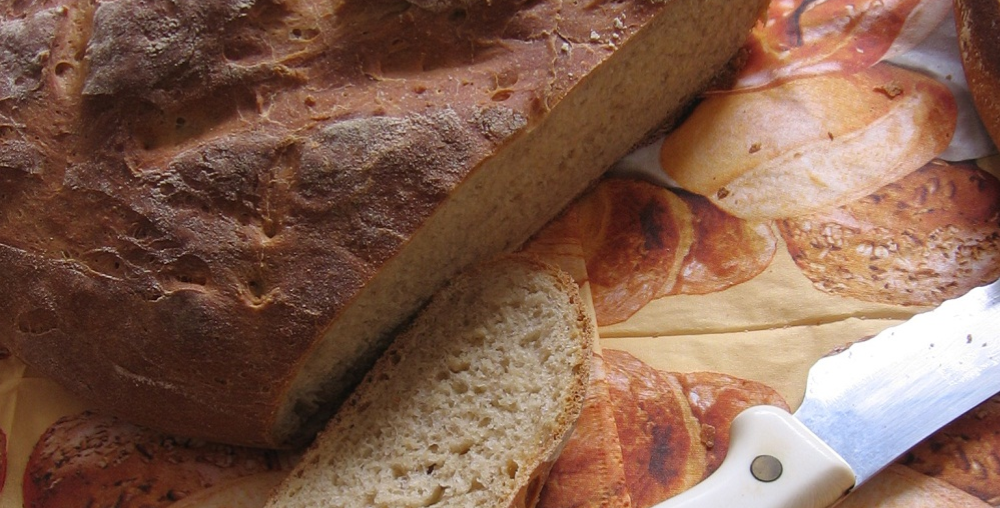
What you want to notice about this list is that sugars (left-hand column) are mostly in the high top part of the chart. Sucrose (table sugar) and glucose are always found near the top, but, here is the kicker: so are white rice, pancakes, bread, corn flakes, crackers, parsnips, potatoes and many other foods. These are the Foods That Act Like Sugar in your body.

Here is a partial list of foods that act like sugar

GRAINS

  • Brown rice
  • Glutinous rice
  • Instant rice
  • Jasmine rice
  • Long grain rice
  • Parboiled rice
  • Sweet corn
  • White rice
  • Wild rice

GRAIN PRODUCTS

  • Breads (all breads)
  • Bagel
  • Baguette, white
  • Blueberry muffin
  • Bran muffin
  • Corn tortilla
  • English Muffin
  • Kaiser bread rolls
  • Rice Pasta
  • White bread
  • Whole Grain bread
  • Wonder Bread™

Breakfast Cereals (almost all)

  • Cheerios™
  • Coco Pops™
  • Corn Chex™
  • Corn Pops™
  • Cornflakes™
  • Crispix™
  • Grapenuts Flakes™
  • Grapenuts™
  • Instant Cream of Wheat
  • Life ™
  • Quick Oatmeal
  • Raisin Bran™
  • Rice Chex™
  • Rice Krispies™
  • Shredded Wheat™
  • Special K™
  • Special K™
  • Total™

Crackers and Chips (almost all)

  • Corn chips
  • Popcorn
  • Potato chips
  • Pretzels
  • Puffed rice cakes
  • Rice cracker
  • Soda Crackers
  • Water crackers

Other Breakfast Foods

  • Croissant
  • Cupcake
  • Doughnut
  • Muffins
  • Oatmeal muffin
  • Pancakes
  • Pop Tarts™
  • Waffles

Cakes

  • Almost all cakes
  • Angel food cake

VEGETABLES

  • Carrots, boiled
  • French fries
  • Parsnips
  • Potato: Baked, Instant, Mashed
  • Pumpkin
  • Sweet potato
  • Tapioca

FRUITS

  • Banana
  • Dates, dried
  • Raisins
  • Watermelon

Fruit Products

  • Fruit Roll-Ups®
  • Fruit Juices
  • Jams and Jellies 
  • Processed fruit bars, fruit wraps…

SUGAR AND SUGAR SNACKS

  • Most sugary snacks
  • Candy Bars
  • Glucose 
  • Honey
  • Jelly beans
  • Sucrose 
  • Syrup

DRINKS

  • All fruit juices
  • All sodas
  • Most sport drinks

DAIRY

  • Yoghurt, low fat
  • Ice cream

BEANS

  • Broad beans
  • Kidney beans

OTHER

  • Macaroni and Cheese
  • Pizza, cheese
  • Popcorn
  • Soup, green pea
  • Soup, split pea

A Sugar is a Sugar

The take home message from the studies done on glycemic index is that a sugar is a sugar, no matter what the source. To your body, it doesn’t matter if you pick up a table spoon of sugar and put it in your mouth, or if you pick up a baguette and start munching on it: the results are the same. Up up up goes your blood sugar every time you eat these foods.

If you want to maintain good blood sugar control, I always recommend eating low or below the glycemic index.


Take the plunge and try the 30 sugar free days challenge:

Related Posts

Tags: ,

61 Responses to What? Foods That Act Like Sugar?

  1. Julie on July 29, 2011 at 5:36 pm

    Dr. Scott,
    I’m working w/ a local natural doc. to help regulate my hypoglycemia & related concerns. I have been eating nothing sweetened with any type of sugar, no white flour, white rice, white pasta or white potatoes. I have, however been still eating whole grain breads (w/o sugar), wheat pasta, sweet potatoes…. What do you think? I would like to be as healthy as possible & maintain level blood sugars. My 6 yr. old daughter seems to be struggling w/ low blood sugar issues as well. I’d like to learn as much as I can so that we can both be healthy!

    • Dr. Scott on July 30, 2011 at 6:51 am

      Julie,

      We used to tell people to stay away from white rice, but go ahead and eat brown rice because it is better for your blood sugar. That all changed when a doctor decided to actually test people’s blood sugar after they ate certain foods. The result of all of those tests is the glycemic index. Many foods act exactly like sugar when you eat them. I always suggest that if you want to control your blood sugar you need to stay away from sugar AND the foods that act like sugar.

      • Steve on February 1, 2012 at 11:51 am

        Hello i have just came across your website, I have been looking for a way to
        cut my sugar. I am 46 very fit I work out everyday, do not drink try to eat correct but eat allot of sugar in my protein bars, I eat white potatoes as well,
        I am going to try your program just wanted some suggestions on protein intake from you, I am 5’9 and weigh about 160#. I do not want to lose allot of weight
        as i am naturally lean, I do lift weights everyother day and take creatine mixed with dextrose (sugar I take it) should I stop the creatine???

        • Dr. Scott on February 3, 2012 at 10:19 am

          Steve,

          The amount of protein you should eat is a really big debate. Most Americans eat around 90-110 grams of protein every day. If you talk to weight lifters, they say around 120-140 grams a day. The Dietary guidelines for the US say around 60 grams (for a typical male), and the World Health Organization suggests somewhere between 30 and 40 grams.

          Most people get enough protein and I wouldn’t worry about supplementing more (like the creatine).

          Scott

  2. Nicola on June 5, 2011 at 7:49 pm

    Hi Dr Scott

    I’ve just come across your website and as I was looking at the GI chart I noticed fructose is at the bottom in the low GI part. This is interesting a Robert Lustig gave a talk two years ago on the effects of fructose (Sugar: The Bitter Truth) and how indirectly (through a serious of biochemical reactions) increases inflammation, insulin and leptin resistance. Just wondering what your thought are on this?

    Regards
    Nic

    • Dr. Scott on June 6, 2011 at 2:51 am

      Nicola,

      It is true that fructose is low on the GI chart, but that is only because the GI measures glucose and not fructose. When we test blood sugar you would think we would be testing all blood sugars, but we are only testing for the amount of glucose in the body. I find this silly, but understand that scientists haven’t devised an easy way to test for other sugars in the body, so we are left with just testing for glucose.

      I agree with Robert Lustig, fructose is bad news. Your liver will decide to either convert fructose into glucose or into fat. The problem is that most people consume glucose along with fructose (high fructose corn syrup is 50 to 70 percent fructose and the rest is glucose), so the liver (seeing that the body has enough glucose) really only has one choice: store fructose as fat. And, yes, fructose appears to increase inflammation, insulin resistance and fat storage.

  3. Heather on March 13, 2011 at 8:36 pm

    I would love to do this detox, however I have hypoglycemia and I am nervous because when I don’t have enough sugar in my body I get really shaky and dizzy. Any tips?

    • Dr. Scott on March 14, 2011 at 9:03 am

      Heather,

      What actually happens with a diet such as this is that your blood sugar stabilizes and it can help with low blood sugar as well. I would say try the diet, but monitor your blood sugar closely. I saw your other comment and I don’t know anything about Nutrition Response Testing.

      Scott

      • Heather on March 14, 2011 at 9:09 am

        Thank you so much for a quick response. What would you suggest as an alternative to sugar if I need a quick “jolt” when my blood sugar drops and I feel like passing out, or get shaky, or dizzy, ect. (as I do when my blood sugar drops)?

        Also, are all N.D.s pretty much the same? As in, same ideas, same framework of thinking, same methodology of healing, same treatments? I am looking for a primary care dr. and I would like a blend of conventional medicine and the natural path. What are your thoughts?

        • Dr. Scott on March 14, 2011 at 10:24 am

          Heather,

          What is happening when your blood sugar drops is that your body is releasing adrenaline in an attempt to raise your blood sugar. Adrenaline is what makes you feel shaky and nervous. The only solution is to raise your blood sugar with sugar (low blood sugar is dangerous). What you should find when you are on this diet is that the drops don’t happen as often when you are eating foods that also don’t cause a dramatic rise in blood sugar.

          What you want to look for in an ND is someone who has gone to an accredited school (many people claim to be NDs are are not). To find one in your area, go to this site: American Association of Naturopathic Physicians. We all have similar training, but have modalities we like to specialize in; I, for example, love diet, nutrition, exercise and herbs.

          • Heather on March 14, 2011 at 6:12 pm

            If the “dr” I saw isn’t found from the link you posted, does that mean he isn’t a N.D.?

            Sorry to be a bother!

          • Dr. Scott on March 14, 2011 at 6:53 pm

            Not necessarily, but probably. Send me a link to their site and I will let you know.

          • Dr. Scott on March 15, 2011 at 11:27 am

            As far as I can tell, he is not a naturopathic doctor who attended one of the medical naturopathic schools. He could be good, I just don’t know.

            I don’t know how far away you are from Lexington, but there is a Naturopath there who I know personally. Her name is Erin Holston Singh and you can reach her here: 859-296-1963. She is having a baby soon, so I’m not sure how available she is.

          • Heather on March 15, 2011 at 11:50 am

            Thank you so much for your time and advice!!

  4. Celeste on March 9, 2011 at 10:57 am

    Does popcorn include, the microwavable packs or does that also include air popped popcorn?

    • Dr. Scott on March 9, 2011 at 10:22 pm

      Yes, all popcorn. It has to do with the glycemic index of popcorn, not the way it is cooked.

  5. Jennica Salyards on February 3, 2011 at 8:56 pm

    I have two questions. 1) what do you do after the 30 days? 2) what do you think about Stevia?

    • Dr. Scott on February 4, 2011 at 6:22 am

      Jennica,

      What you do after the 30 days is up to you. I always hope that people have learned how to stay away from sugars and foods that act like sugars and that they will never eat sugars again. I do talk about how to balance a return to normal eating in the last few e-mails.

      Here is a post on Stevia: What about stevia and xylitol?

  6. Michelle on January 13, 2011 at 7:31 pm

    Hi what about young thai coconut? Is this too much sugar? Love this program! Totally works!
    Thank you!

    • Dr. Scott on January 14, 2011 at 6:45 am

      Michelle,

      Coconut and coconut water are usually okay as long as there are no added sugars. I tried searching online, but there are too many products. Send me a link to the product you are talking about or send the ingredients and I can let you know better. Thanks for the feedback!

      Scott

  7. Sugar Mama on January 5, 2011 at 10:24 am

    Do I avoid all the foods that act like sugar in my body?

    • Dr. Scott on January 7, 2011 at 7:43 am

      Yes, you stay away from all foods that act like sugar.

  8. margaret blaine on August 12, 2010 at 12:26 am

    Cannot take insulin. age 69, female. control with diet. lately havin lots of trouble keeping readings down They are about 200-250+. Very tired, hot, prespire alot. fall asleep after I eat anything. My diet very limited. eat sml amts due to severe IBS. My V-D is @ 28, was 8. under med care. V-D makes me ill. Sweats, itching. am relying on sun. Last hope is Glycemic index. Do u hav any pointers to offer? Thanks

    • Dr. Scott on August 14, 2010 at 8:22 am

      Margaret,

      The best way to deal with this is to find some professional in your area to help support you. When you start eating lower on the glycemic index, your medications will change. I suggest that people eat around 80 to 90 percent fruits and vegetables and eating that way will definitely change your need for medications.

  9. Miranda P. on August 1, 2010 at 7:53 am

    Hi, I just started the program yesterday and I’ve already lost 1 pound! How much do people usually lose after the 30 days are over?

    I did do the program last year, but I didn’t make it the whole 30 days, so I’m hoping this time I can do it!

    Also, if you had to recommend what to eat, which fruits and vegetables would you choose? I really like peaches, but i saw that it’s in the “medium” part, not a “low and below” food, even though the list in the e-book lists it as a food you can eat! So should I just stick with the list you’ve provided or go and make sure all of the things are “low and below”?

    • Dr. Scott on August 2, 2010 at 4:41 am

      Hi Miranda,

      Glad to hear that you are giving it another try! Do your best to stick with the low and below foods, but an occasional peach should not hurt you. My favorite fruits are the berries because they are low on the glycemic index and packed full of great nutrients.

  10. Liz Voth on July 20, 2010 at 7:07 pm

    Great to have this info. I thought I was sugar free as of a week ago, but now see that potatoes and a number of fruits are rated high glycemic index. So here’s for a fresh start eating below 19.

  11. rob | atlanta homes on May 31, 2010 at 7:03 pm

    I’m just starting to investigate this topic. Very nice site and good info.

    I’ve got nearly all the symptoms over excess sugar and caffeine usage.

  12. Ali on February 10, 2010 at 2:43 am

    Hello, can you tell me if Quinoa is ok and also Miso soup?

    Many thanks

    • Dr. Scott on February 10, 2010 at 9:37 am

      Yes, quinoa is okay (it is a seed, not a grain) and Miso is alright also.

  13. Sarai Frost on January 23, 2010 at 9:12 pm

    Hi Dr. Scott!

    I have been on a 30 day without sugar challege of my own, Today is day 21 for me. I have been reading all my labels before I use anything to cook or anything to eat to make sure there is no sugar in the ingredients label. I’m not sure if I should be paying attention to the nutrition label. Also, what do you think about agave and honey. I have been staying away from those, just to be safe but I’m not sure if they are ok to have during my 30 day period. And what about sugar free gum? Just wondering if you can shed some light. Thanks!

    • Dr. Scott on January 25, 2010 at 5:40 am

      Sounds like you are doing a great job Sarai! Yes, stay away from agave and honey, they are high in fructose (which just might be worse than glucose). I really don’t like artificial sweeteners either; in fact, I’d rather you eat table sugar than artificial sweeteners. If you must have gum, look for those sweetened with Xylitol.

  14. Sucker Free January « PowerUpLife.com on January 22, 2010 at 2:23 pm

    [...] This year I had strawberries, blackberries, and cream.  The reason?  Right now I’m on a 30 day sugar detox, an experiment in something called a “low and below” diet.  For 30 days I’m eating no sugar, nor anything that acts like sugar in the body. [...]

  15. Debi on January 9, 2010 at 8:59 am

    Thanks! It will be interesting to see how my tastes change. I can see how that would work.

    I’m a drop-out from last year :( but I’m back! Yes, I did download the e-book back then, so I will reread it!

    Have a great weekend.

    • Dr. Scott on January 9, 2010 at 9:06 am

      Great to have you back and good luck this year!

  16. Debi on January 8, 2010 at 9:53 am

    Hi Dr. Olson,

    I thought I might see a list of the foods that are like sugar. Do you have something like that?

    Also, I have a concern about eliminating grain from my diet. Are there some acceptable grains I can include?

    I, like many others, experience the day after hang over with grogginess, tiredness, and fuzzy thinking. To name a few. I would like to improve my diet, but I am sooo picky and don’t like that many veggies. IS there a way I can trick myself into eating more fresh veggies?

    Thanks for all you do and your encouragement to strive for better health!

    • Dr. Scott on January 9, 2010 at 8:30 am

      Hi Debi,

      The foods that act like sugar are all those high on the glycemic index. If you haven’t yet, sign up for the 30 Sugar Free Days program and you can get a free e-book that explains all the foods that act like sugar in your body, my book Sugarettes also has an explanation. Basically it is any food that has been changed from its original state (such as grinding grains, fruit juices and others).

      The grains that I think are okay are any grain that you are not allergic to and one that is eating the way most people eat rice (in whole form).

      As far as the veggies go, as you change to a healthier diet, your tastes change. The less sweet, fat and salty food you eat, the more alive your taste buds become. If you eat a clean diet and then go back and try some food that is super sweet/salty/fat you will be surprised how crazy it tastes.

Leave a Reply

Your email address will not be published. Required fields are marked *

*

Spam protection by WP Captcha-Free